Showing posts with label noir. Show all posts

Friday, August 20, 2021

HOT WIRE MY HEART Punk Noir Potboiler OUT NOW!

Hot Wire My Heart is now available for your entertainment and continues my string of punk noir novels, which include Every Good Boy Dies First and Every Bitch For Himself. It’s a punk take on Sweet Smell of Success, a whirlwind ride through the 1978 San Francisco punk scene through the eyes of gossip columnist Dante Sterno. He dishes out all the dirty gossip on all the local punk heroes and heroines for Ripoff Magazine, a cheap local zine.

Dante’s pursuit for more and more dirt on popular rockers in the scene becomes more and more shameless and scurrilous as the book goes on, and it finally reaches a point where his dirty scoops catch up with him. To ensure his survival he hires the services of car thief and protection thug Big Jason Gulliver, back again from Every Bitch For Himself (which chronologically follows this novel).

Big Jason provides some much-needed protection but unfortunately raises the ire of a prominent politician, who in turn contracts rival car thieves and gunmen to liquidate Jason. In between the action there’s lots of sex, violence and hardcore punk. There’s even room for a roller derby match in between all the skull cracking.

The character of Big Jason was based on a real punker I knew, a tough, amoral thug – Irish, of course – a cross between Lawrence Tierney and Matt Dillon. He really did protect people, sometimes for money but mostly for the thrill of kicking assholes around. A man like that is instant gold for noir; a thug who’s capable of making any kind of trouble is as noir as it gets.

Hot Wire My Heart, named after a Crime song, was a chance for me to reminisce about the old days of San Francisco punk, a scene that many of us Southern California punks would trek up the coast periodically to enjoy. San Francisco punk was more art damaged than LA punk, beneficial because it resulted in less aping the London scene, which LA sometimes indulged a bit much.

Bands like The Avengers, The Offs, Crime, UXA and The Sleepers made art on their own terms. Since the average punk audience back then was so small there wasn’t a lot of money to be made, resulting in no need for compromise and creating the most original and exciting punk of that era. I hope Hot Wire My Heart recaptures some of the energy of those electrifying San Franciscan nights.

Hot Wire My Heart retails for only $3.99 and can be bought at these eBook retailers:

Amazon Kindle:
https://www.amazon.com/Hot-Wire-Heart-Andy-Seven-ebook/dp/B09CRVJHL1/ref=sr_1_3?dchild=1&keywords=hot+wire+my+heart&qid=1629249084&s=digital-text&sr=1-3

Apple Books:
https://books.apple.com/us/book/hot-wire-my-heart/id1581407105

Barnes & Noble Nook:
https://www.barnesandnoble.com/w/hot-wire-my-heart-andy-seven/1140023225?ean=9781098399412

Kobo (Canada):
https://www.kobo.com/us/en/ebook/hot-wire-my-heart

Scribd:
https://www.scribd.com/book/520407943/Hot-Wire-My-Heart

BookBaby Bookstore:
https://store.bookbaby.com/book/Hot-Wire-My-Heart&b=p_fr-ho-bl

Friday, June 5, 2020

RED COFFEE Suspense Novel OUT NOW!

Red Coffee is my latest novel, and it's about young model Lois Angelus, grabbing any modeling job she can, whether it's posing for sculptors, posing for high-end department stores, or even providing eye candy for a tenth-rate slapstick comedy short feature. Everything seems to be moving steadily for Lois until she’s witness to a murder of a prominent banker. That's when her troubles begin, and they never slow down in this hard-boiled horror tale.

It's the story of a woman caught in the crossfire of a class war in Thirties Los Angeles. My novel blends elements of urban horror and roman noir with a feminine viewpoint through it all. I originally serialized this novel on my blog about ten years ago, and now it can be enjoyed as a standalone novel.

The prototype for Lois is based on my favorite actresses of the post-silent and pre-code era like Ann Dvorak, Aline McMahon, Barbara Stanwyck, Joan Blondell, and Leila Hyams, to name just a few. The way they combined feminine grace with a tough inner core inspired me to create a character in tribute to them.

I put this project on delay for all these years because it was such a radical departure from anything else I've written I didn't really know what to do with it, but now I feel confident enough to release it on its own merits.

Red Coffee is a hard-boiled amalgam of the pre-code cinema of William Wellman and the moody horror films of Val Lewton, creator of Cat People and The Seventh Victim. Prepare to enter a world of deadly scarecrows, murderous folksingers, academics tripping on LSD, slanderous séances, white supremacist terrorists, and birds, birds, birds!

Red Coffee is available as an eBook for only $3.99, and can be purchased through these eTailers:

Amazon Kindle: https://read.amazon.com/kp/embed?asin=B0892PPSSC&preview=newtab&linkCode=kpe&ref_=cm_sw_r_kb_dp_ooPZEbD3QRBJT

iTunes: https://books.apple.com/us/book/red-coffee/id1514799647

Barnes & Noble Nook: https://www.barnesandnoble.com/w/red-coffee-andy-seven/1137067297;jsessionid=E86FAA41AB4A3B7B80B38689E1390E9D.prodny_store01-atgap09?ean=9781098315139&st=AFF&2sid=Goodreads,%20Inc_2227948_NA&sourceId=AFFGoodreads,%20Inc

Kobo (Canada): https://www.kobo.com/us/en/ebook/red-coffee

My new novel can probably be found at other sites besides the ones mentioned above, so check it our wherever it is. I hope you enjoy it, and as usual, I guarantee outrage on every page!

Monday, April 18, 2016

We Are The One: A Look At Mickey One

One of my favorite films of all time is Mickey One. It was released by Columbia Pictures in 1965 and directed by Arthur Penn and starring Warren Beatty. Mickey One is the story of a lounge stand-up comedian who’s on the run from the mob for reasons left open to conjecture: Were there unpaid debts? Was he playing around with the mob boss’ mistress? Was he in arrears for countless favors from the mob?

Mickey runs away after being called on the carpet by club owner Ruby Lapp (played by Franchot Tone in one of his last performances). He hits the skid row section of Chicago and lifts the social security card of a rolled drunk named Mickey Wonjhowcski. which he shortens to Mickey One.

Living in a flophouse and working as a pearl diver, he has a tenant forced on him by his insane landlady. He falls in love with the girl and she recognizes his talent, prompting him to badger a tenth-rate burlesque agent, who books him into a string of dogwater lounges.

Gingerly working his way back into the nightclub grind, he hopes he won’t attract much attention, but of course with his Warren Beatty looks and enormously successful comedic talent he eventually attracts all the attention he previously hoped to avoid. Mickey One ends with him performing to a dark, empty club with a blinding spotlight burning into him with an unknown figure behind the light (the mob boss?). The moral of the story: you can run but you can’t hide.

Mickey One was made in the Sixties, an era when the mystery of the John F. Kennedy assassination greatly disturbed the country and provoked endless meditations on conspiracies, innocent people on the run for unknown transgressions, and questions of personal identity. It was an era of Kafkaesque entertainment which spawned television shows like The Prisoner, The Fugitive, Run For Your Life, Coronet Blue, and other weird programs.

Arthur Penn once said that Mickey One was his attempt to make his version of a French New Wave film, and in that regard he considered the film to be a minor failure. Part of the French New Wave influence was the casting of Alexandra Stewart as the love interest, who was Francois Truffaut’s girlfriend at the time.

Mickey One is so much more than a Nouvelle Vague homage, though, in fact it’s one of the most American films ever made. The film looks like a Tom Waits album cover from start to finish with its scenes of Salvation Army bands, hobo jungles, wrecking yards and burlesque queens (and with no Barbara Nichols in sight!). If you liked Robert Frank’s book The Americans you will love the beautiful cinematography of Ghislain Cloquet.

I’ll never forget the first time I saw Mickey One: it was in 1978 and I was living in The Canterbury Apartments in Hollywood at the time. I had a terrible case of the flu and had that thing where you wake up in the middle of the night and can’t go back to sleep. I turned on my black and white portable TV and watched The Late Show and there it was, Mickey One.

I felt as if I was getting a broadcast from outer space. It was the parallel reality I thought I’d never see. Warren Beatty and his absurd America oif exploding industrial art called YES really sold it for me. From that moment on I called myself Andy Seven and I’ve never looked back, just like Mickey One.

Friday, August 21, 2015

WRANGLERS' CANYON/CRASH WALKER Double Novel Out Now!

Meet Crash Walker: a man too obtuse for trouble, too lazy to kill anyone, and in addition incredibly boorish, self-centered and incredibly good looking enough to earn contempt from everyone he meets, especially from other men. He is the star of my double novel set WRANGLERS' CANYON/CRASH WALKER.

The western novel format is an extremely limited one. Most stories from that era are rigidly defined; they have to be, of course, since they are confined to a specific point in time. The standard western tale has been told countless times via literature, television, radio shows and motion pictures for over a hundred years. The biggest challenge for me was to write something fresh within that classic genre.

I made a concerted effort to avoid the current nouveau Western clichés by drawing on a pair of disparate influences: With Wranglers' Canyon I went for a more surreal approach, so I used Alejandro Jodorowsky's classic film "El Topo" as a major influence, but more importantly I drew from the erotic horror films of Jean Rollin and Jess Franco.

As for our hero, Crash Walker, although he populates both novels, no two stories could be more different; in Wranglers' Canyon our hero is a floater, drifting between jobs as a cattle driver, ranch hand, rodeo rider, singing star, convicted criminal, ultimately promoting to Sheriff of Jonestown. He accepts the role forced on him.

In the second novel Crash Walker,which takes place 100 years later, he's a western television star in Hollywood during the post-JFK era. This time he’s the target of an ominous conspiracy to exploit him as a puppet politician propped up to serve a small Californian committee of powerful businessmen. In the second novel, unlike the first, he doesn’t accept the role forced on him.

He’s also charged with the murder of a right wing television star, making him simultaneously famous and notorious, but not quite the way he wants it. Through it all he films toy commercials, performs publicity stunts, makes public appearances, visits his mentally insane missile designer father, and dodges an even more mentally unstable ex-girlfriend.

Walker is even more of a fantasy figure in the second novel than in the first one, i.e. his name isn’t even real, it’s a showbiz name created by a casting agent. While the first novel challenges the bridge between fantasy and reality, the second one has its feet firmly planted in reality with our star earning his keep with fantasy.

TV westerns were a major pop culture force during the Sixties, putting our hero squarely in the center of the action in Hollywood, placing him at Sunset Boulevard parties, teen festivals by the beach and Hollywood movie premieres. If it happened in the Sixties then Crash Walker was most likely there.

The book you’re reading is presented in the double novel format so popular during the paperback publishing boom of the Forties and Fifties. Both novels have been joined together in one volume because in addition to starring Crash Walker they also have parallels in characterization and plot development. This was a surprising coincidence, given that both novels were written four years apart of each other.

In both novels Crash Walker responds to a whirlpool of turbulent change forced upon him by men of control, greed and societal pressure. These are tales about troubled times and the man who meets them head on.

Wranglers' Canyon/Crash Walker, Andy Seven’s double novel is available for $3.99 at all popular eBook retailers, including:
Amazon Kindle:
http://www.amazon.com/Wranglers-Canyon-Crash-Walker-Seven-ebook/dp/B0149J3P8Q/ref=sr_1_1?s=books&ie=UTF8&qid=1440213205&sr=1-1&keywords=9781483557540
iTunes:
https://itunes.apple.com/us/book/wranglers-canyon-crash-walker/id1032555968?mt=11
Nook (Barnes & Noble):
http://www.barnesandnoble.com/w/wranglers-canyon-crash-walker-andy-seven/1122574654?ean=9781483557540
Oyster:
https://www.oysterbooks.com/book/APoGRc2kxCC2tR8NZvJNtm/wranglers-canyoncrash-walker

Each website provides a short sample - about four chapters worth - of the novel for previewing before purchase so you can see what deviltry is brewing in this shiny beast.

Saturday, August 9, 2014

Every Bitch For Himself - Punk Rock Crime Novel OUT NOW!!!!

It's 1978, and Hollywood Boulevard is burning with punk rock energy and with it the advent of career criminal Big Jason Gulliver, an amoral monster in silver hair, torn t-shirt and army fatigues. Big Jason plans to knock over Rocket USA, the most popular punk club in town, using his friends who all work on the inside of the club.

Standing in his way are three psychopaths who run Rocket USA: Jack Sterling, owner of the club, a has-been television star with severe OCD; Chuck Steakhouse, punk surfer thug with a capacity for rape and torture; and Miggy Sanchez, a thug every inch the equal of Big Jason in amorality.

Every Bitch For Himself captures all the energy of the 1978 Hollywood punk scene with episodes of violent rock & roll, perverse cult rituals, and nightmarish parties. Just as punk rock bands twisted old songs to fit its explosive style, Every Bitch For Himself corrupts old film noir scenes culled from The Killing, The Asphalt Jungle, Born To Kill and The Killers, to name a few, to create a new punk rock crime novel.

Andy Seven’s previous novel Every Good Boy Dies First captured the fervent pace of the Nineties music scene, drawing on experiences from his music career to craft a chilling novel. Once again Andy draws on his memories of the 1977 Hollywood punk scene to create Every Bitch For Himself.

How and why did punk happen? Popular music split into two factions following the demise of glam rock in the late Seventies: disco and punk. There was disco for the club kids who wanted to keep all the glamour, danceability and sexual decadence of glam alive, and on the other side there was punk, which continued all the outrage and drama of glam. Like two unruly siblings both styles of music hated each other.

In addition to playing in numerous punk bands on the '77 Hollywood scene Andy Seven can also be read discussing the history of 1977 Hollywood Punk in books like We’ve Got The Neutron Bomb by Brendan Mullen and Marc Spitz; Improvisation, Identity and Tradition by Charles Michael Sharp, and Lexicon Devil by Brendan Mullen and Adam Parfrey.

Every Bitch For Himself, after all is said and done, is still a crime novel. It follows the tradition of the standard heist gone wrong story, but how it goes wrong and the disaster that follows it is an exercise in severe karmic payback that needs to be read to be believed. Who gets away with crime and who doesn’t is the real kick of the story. Are there double crosses or are there consequences to everyone’s actions? You’ll have to read it to find out.

Ten things you can count on reading in my latest novel:
1. Drunken punks playing Bologna-Toss on loaded chicks.
2. Has-been TV Western cowboy stars.
3. Mods vs. Punks battle it out on the beach.
4. Squeamish Los Angeles police detectives.
5. Discotheque chase scenes.
6. Blood-drenched performance art rituals.
7. Beauty products weaponry.
8. King Kong scales the Capitol Records building.
9. Miracle Mile shopping sprees, and:
10. The world's greatest shithouse fist fight.
Yep, if it hasn't been written yet, you can count on me to write it for you. May God and Ringo Starr forgive me!

Every Bitch For Himself, Andy Seven’s second punk crime novel is available for $4.99 at all popular eBook retailers, including:

Amazon Kindle:
http://www.amazon.com/Every-Bitch-Himself-Andy-Seven-ebook/dp/B00MIBTIAC/ref=sr_1_2?s=books&ie=UTF8&qid=1407503272&sr=1-2
iTunes:
https://itunes.apple.com/us/book/every-bitch-for-himself/id906954217?mt=11
Nook (Barnes & Noble):
http://www.barnesandnoble.com/w/every-bitch-for-himself-andy-seven/1120084022?ean=9781483533902
Scribd:
http://www.scribd.com/book/236143482/Every-Bitch-For-Himself

Each website provides a short sample of the novel for previewing before purchase so you can see what deviltry is brewing on each page.

Every Bitch For Himself combines two violent art forms, punk rock and film noir to create an exciting new hybrid of crime writing. Check out the new novel and experience it for yourself.

Saturday, April 26, 2014

The Pickpocket In The Slam Pit

11:45 PM. Skipjack's. Long Beach, California. Skipjack's was a hardcore punk club in the South Bay area. The club was an old wrestling-cum-roller derby auditorium framed in stucco and neon lights with a lot of rotting wood inside. The auditorium itself seemed to be slowly decaying from the salty sea air that wafted northward from the harbor a few miles away.

Punks from all over the hoods of Wilmington, Lomita, and Pedro all converged every Friday and Saturday nights at Skipjack's. Stew Rat Nickson was no exception, a miserable specimen of lowlife punk rock, a skeletal, gangly youth with clammy white skin housing a relentless network of freckles and pimples. He had so many freckles and pimples nobody knew where one began and the other one ended.

His head of short hair was dyed a sickly orange with bald patches that had other colors dyed in there, and dyed so badly that some of the dye stained his neck and ears. Mr. Stew Rat simply didn't care.

Tonight was the night of Stew Rat's big score. It was simple: his tartan bondage pants had a long zipper running down the length of his right leg with a cargo pocket running from upper thigh to his ankle for hiding things...like wallets.

The plan was to get into the slam pit and find himself the better, aka well-fed, suburban punks and pull their wallets and cram it down his secret pocket. The club was so booked with moshers he would easily score, and no one would be the wiser. The quickest smash and grab ever.

Crank Call were on stage and tearing it up, playing a mile a minute and roaring as ferociously as a jet plane taking off. The lead singer, a beefy sunburned monster in a crewcut stepped up to the mike and bellowed, "HOW MANY OF YOU DICKS CAME HERE TONIGHT TO FUCK SHIT UP? YEAH!"

The audience roared and Stew Rat pushed and jostled his way through the crowd, knocking over a few beers in the process.

"THIS FUCKIN' TUNE'S CALLED 'BOMBS AWAY'. 1-2-3-4!!!!"
Crank Call pounded into the song, drums beating machine like rhythms like runaway oil pumps and guitars stuttering like the screaming factory noises straight outta Long Beach.

Stew Rat shoved his way further towards the pit, bodies parting further and further away from the chaotic dance of destruction, a sausage fest of tribal brutality. Young men careening and bashing into each other like wayward steel balls hitting bumpers and flippers in some god-forsaken pinball machine.

Stew Rat grinned with his decaying orange teeth glowing in the darkness. An occasional mosher would bump into him, some smiling and saying, "SORRY, DUDE!".
Stew Rat didn't care, they were fair game to him.

He pulled the zipper halfway down the long cargo pocket, readying himself for the big steal. He was about to hit his first victim when the song ended abruptly as all hardcore songs go.

"FUCK YOU, DUDE! THIS ONE'S CALLED 'PIT BULL NUMBSKULL'! 1-2-3-4!!!!"
Crank Call's bassist played a rumbling groove, shaking the walls like a 10.5 earthquake on the Richter scale. The guitar flew right in like a Space Shuttle gone berserk.
"PIT BULL...NUMBSKULL! PIT BULL...NUMBSKULL! YOUR BRAIN'S HALF EMPTY, YOUR BRAIN'S HALF FULL! PIT BULL...NUMBSKULL!"

Stew Rat licked his lips and chortled.
"Come to Poppa, fucker!" He angled his way in to a clutch of young punkers all collapsing in a heap. He half-humped the cleanest looking one from behind and quickly slipped his fingers into his back pocket and slipped the fancy crocodile skin wallet down the cargo pocket.
"Score!"

He moved over to another clutch of guys ready to collapse in a heap and dog piled underneath, pulling one wallet, then another out of the range of anyone's vision. Both wallets went straight down the cargo pocket.

As soon as he got up on his feet he saw a big fat dude crowd surfing, the kids around him holding up the surfer with their arms suspended above their heads.
"This is too easy!" Stew Rat chuckled. "Easy pickings to be sure!"

He spotted a wholesome looking punk and leaned in on him, slipping his fingers effortlessly into his rear pocket. He didn't have a wallet in there because he pulled out a lump of snot rags.
"YUCK! He probably keeps his wallet in the front. That sucks".

Stew Rat saw another clean-looking punker hoisting the fat surfer with both arms up and rubbed up against him. Sliding with the agility of a ferret, he slipped his fingers into the back pocket and quickly pulled out a wallet with punk rock stickers all over it and tossed it down the now bulging cargo pocket. He finished his steal just in time as Crank Call finished their song.

"Ho, ho, ho, this rules! This might be my best night ever! Long Beach is the greatest!" He laughed to himself. He looked around feeling mighty smug about himself until he caught a huge, dark Latino dude in a wife beater staring at him across the pit with sheer hatred.

"Shit, is this asshole onto me? He looks like he saw something. Maybe everything", Stew Rat got nervous.
The Latino dude was about to cross the pit and attack Stew Rat.
"What does this fuck face want? Does he want a split, is he gonna narc on me or is he gonna pound me for all my shit?"

Stew Rat began walking away backwards, but it wasn't necessary. Crank Call's singer stomped up to the microphone and barked.
"YOU JAGOFFS ARE WEAK!!!! I WANNA SEE SOME SERIOUS MOSHING, DICK FACES! THIS SHIT'S CALLED 'BREAK, BROKEN, BROKE'! 1-2-3-4!"
The band busted out a stormy wail of radioactive waste, guitars feeding back and spitting out electric noise and the singer howling like a witch doctor fished out of the Pacific Ocean.

The guys in the slam pit were now doing the circular chicken dance like demented Navajo warriors, stomping their feet and pumping their arms like a circular locomotive around the dance floor.

The Latino quickened his pace towards Stew Rat, dodging the slam pit circle and getting closer and closer to catching up with him. Stew Rat began to panic, wet himself, whimpered and broke out in a nasty sweat. A musky odor filled the air.

Just when his pursuer was about to catch up with him a stage diver leaped off the stage and landed feet first on the big, dark man's head, kicking him unconscious. The slam pit opened up and bouncers pushed their way in to take away the unconscious Latino. They grabbed him by his legs and pulled him across the club like a limp wheelbarrow.

"OFFICER DOWN, OFFICER DOWN. NO SERIOUSLY, LET'S DO ANOTHER SONG, THIS ONE'S CALLED 'PISSPOT PRINCESS'". The band ripped into their newest number with a vengeance.
Stew Rat calmed down in the knowledge that his pursuer was knocked out cold and put out of the way.

He spied his next victim, a beefy well-fed punk rock jock. Everyone in the pit pressed up against his body so his pressing up against him wouldn't look conspicuous at all. This was too perfect. He shoved and slammed his way towards the jock, ricocheting with the rest of the guys in the pit.

"CLOSER, CLOSER, ALMOST...THERE!" Stew Rat practically humped the jock with his torso, quickly slipping his fingers into the back pocket and pulling out the wallet. Just as he was about to toss it down the secret pocket, he heard someone yell, "LOOK OUT!"

The bondage strap that ran across his trousers was caught in the jock's left leg and he was stuck to him and couldn't extricate himself, meaning he was stuck when he saw Crank Call's guitarist jump off the stage and land on top of him with the guitar's head stock impaling him deep into his skull, the stainless steel machine heads knifing into his cranium, thus ending the short lived crimes of Stew Rat Nickson.

Copyright 2014, Andy Seven.

Top Illustration by Rebecca Seven. Lower Illustration by Jaime Hernandez.

Friday, April 11, 2014

Now Playing ABSOLUTELY FREE on You Tube

Once upon a time, well a few years ago I wrote a periodic blog called "Stuff I Burned From TCM" which was a regular round-up of movies I burned off the TV set from Turner Classic Movies because they weren't available on video. TCM probably caught wind of that happening too often so now they're in the business of selling overpriced dubs of these films.

Well, there are still a ton of things you can't buy from TCM but you can definitely see for absolutely free on You Tube, and not just scattered film clips but the movies in their entirety. You can even save them and burn them, too. Life is wonderful!

In addition to the movies listed below I've also burned dozens of Heckle & Jeckle cartoons (Fifties Terrytoons genius) and a funny Shemp Howard solo short called "Mr. Noisy", where the moonlighting Stooge spends all his leisure time heckling tennis players, golfers and baseball pitchers at the top of his lungs. Wicked!

Alias Nick Beal (1949) Ray Milland breaks the bank playing a demonic apparition who helps a civic minded District Attorney (Thomas Mitchell) with framing a untouchable racketeer and consequently tempting him with a shot at the Governor's race, seal with a pact.

Many of the scenes with Mitchell and Milland either takes place on a foggy wharf or in some oceanfront dive (Don Burnham returns!). Of course, no noir is complete without a femme fatale so the great Audrey Totter provides a moral base, veering from dockside slut transformed by Beal into a politico temptress, a la Monica Lewinsky.

Totter delivers a great, convincing performance in her two phases but it's clearly evident that this is Milland's show all the way. He plays The Devil with great relish and seems to enjoy himself quite a bit playing a nasty, evil spirit.

Asphalt (1929) is a German silent film classic directed by Joe May, and if you liked the Louise Brooks classics "Pandora's Box" and "Diary Of A Lost Girl" you'll very likely enjoy this one, too. The film begins with breathtaking scenes of Berlin night life in the Twenties with the serpentine underworld slithering through the crime-ridden streets.

Joining in the larceny is Else Kramer, played by the great Betty Amann (shown above), conning an old jeweler with seductive behavior. While she's teasing the old fogey out of his diamonds we see a big, dumb lug of street cop Albert Holk (Gustav Frolich of "Metropolis") doing his boring job of guiding cars across the street.

After Else is accused of swiping diamonds in the store they grab a cop down the street, and the next thing you know Officer Holk takes Else in for booking. Unfortunately, Else turns on the water works in the cab and persuades Officer Holk to take her to her flat first so she can grab a few of her things.

She turns on the charm and the cognac and Office Holk finds himself in bed with the criminal. Was their love making real or was it just another con job pulled by Else? It's hard to tell especially since her current boyfriend, a big-shot criminal busts in on them later and things come to a deadly head.

Asphalt is another great film about an honest man fallen from grace by a demonic woman. The Germans seem to be fond of this plot since The Blue Angel mind the same territory with dramatically different results.

Amann may not be as endearing as Brooks or as humorous as Dietrich but had she moved to the States she probably would have had a great career as a film noir femme fatale. If you like great silent films then Asphalt should be at the top of your list (right after Piccadilly).

Woman On The Run (1950) An excellent noir completely owned by Ann Sheridan as you've never seen her before. After playing the reliably good girl in so many Warner Bros. films in the Forties she becomes a nasty bitch in this film, looking and behaving a great deal like Rita Hayworth did in "Lady From Shanghai".

The great irony of the story is that the real person "on the run" is Sheridan's husband who suffers from major paranoia after witnessing a drive-by shooting. Since Ann is the only one who can lead the police to a husband she hates she builds up a hard as nails attitude. You wonder who she has more contempt for: her husband or the authorities.

Filmed almost entirely on the streets of San Francisco, portions of the film almost verge on being some lo-fi travelogue, Ann hitting the pavement of Market Street, Fisherman's Wharf and old North Beach. The street scenes put the location shots of "D.O.A." to shame!

What makes the film so brilliant, however, is the way both the police detective, played by Robert Keith, and the pesky news reporter, played by Dennis O'Keefe, force her to give them more and more information about her much hated husband. The woman on the run flees the streets of Frisco Town like a demented harpy confessing her feelings about a man she once loved.

The great climax to this film takes place on a roller coaster in an amusement park (shades of "The Burglar"!). Robert Keith you'll recognize as the small town sheriff in "The Wild One" and Dennis O'Keefe is great as usual just as he was in the Anthony Mann noirs "Raw Deal" and "T-Men". Highly recommended!

Friday, August 30, 2013

"Every Good Boy Dies First" - the Electric Crime Novel is Out Now!!!!

"I can tell Electric Stories
Electric Stories that will surely blow your mind
People find that I can tell
Electric Stories very well"

-Electric Stories, The Four Seasons

"Every Good Boy Dies First", the bi-weekly serial run on my blog Out Demons Out has finally been published in compiled, full-length form for your reading enjoyment. The tale of a young musician's dream of playing in a band only to watch it degenerate into a nightmare of greed, power, and deception, just like any sleazy non-artistic corporation. It's the bitter pill no one wants to swallow: rock bands don't have more fun, and here are the reasons why.

"Every Good Boy Dies First" is the story of Griff (Sam Fuller's generic name for every hero featured in his films from Forty Guns to The Naked Kiss), Hollywood trumpet player who falls under the spell of both free jazz and punk rock and staking an original sound as well as a name for himself with his band Garbage Truck.

While Griff trudges around Hollywood setting up Garbage Truck shows his former music teacher, now homeless and destitute hovers around the old music haunts like a ghost. My novel basically sets the tone of story by presenting two different ends of the musical spectrum: a hip, promising young jazz player playing punk rock and creating new, exciting sounds; and the old guard, a failed big band jazzer, rotting on the streets of Hollywood after spending his life making traditional music. Did the ends justify the means?

The questions all through the book becomes: how far is Griff from becoming just like his teacher, Jeffrey Chandler, roaming from apartment building to apartment building like a vagabond, trying to keep hi home life together while maintaining his artistic muse? Will he eventually end up homeless like his sensei? Griff has to keep his head together while dealing with clueless radio DJs, parasitic fanzine writers and devious scenesters. All to a breakneck hardcore beat.

Garbage Truck play the hot clubs all over town but feel a degree of peer pressure to play a more accessible, alternative-friendly sound just to go with the flow. Because our story takes place during the grunge-fueled Nineties, the boys in the band plot to wrest Griff's ownership of the band and forego a less cacophonic punk for a more sludgy stoner metal sound. Griff's vision of exploring new sounds is viewed as a commercial threat to the more careerist rockers in the band.

Egging his band to foil Griff is an arrogant booking agent, played by Moish Wilson of Varmint Booking as well as shallow all-girl band Kitten Claws. While Griff feels the pressure to cave in to commercial vapidity - remember when Punk bands went New Wave in 1979? - he holds on strong to his creative muse, finally giving into a climax of extreme violence.

Because "Every Good Boy Dies First" is a punk rock noir novel first and foremost, there's a dead body in there somewhere, there always has to be, a sadistic nightclub bouncer with the IQ of a sack of rotting meat. When Griff discovers the stiff's carcass in a parking lot in the dead of night it's similar to Antonioni's Blow Up, a murder no one wants to believe, much less care about.

There are a couple of people who have groused about my novel being too depressing. I don't get this remark at all. I didn't set out to write a trite load of shit like Almost Famous or Rock 'N Roll High School. If the world of rock is so sweet and jam-packed with fun why do so many bands break up? Very few rock fiction novels ever delve into the struggle, bitterness and futility of playing music. "Every Good Boy Dies First" completely demolishes the false premise that every show's a party. If only they were!

The cover art was designed by Rebecca Seven, who's designed albums and tees for The Red Hot Chili Peppers, L7, Faith No More, and Frightwig, she was featured in the anthology of female lowbrow artists, "Vicious, Delicious, and Ambitious".

"Every Good Boy Dies First" is first and foremost a story about artistic freedom and the battle to defend it even in a forum as self-deceptive as the alternative music scene. Dressed in noir clothes, you'll feel the throbbing feedback guitars humming through your brain and smell the beer and blood-stained walls closing in on you because Griff plays trumpet like Gabriel, summoning up doomsday with every blast. Read and believe!

Links to get "Every Good Boy Dies First":

Amazon Kindle
http://www.amazon.com/Every-Good-Dies-First-ebook/dp/B00EPQ074O/ref=sr_1_1?s=books&ie=UTF8&qid=1377373472&sr=1-1&keywords=every+good+boy+dies+first

Nook
http://www.barnesandnoble.com/w/every-good-boy-dies-first-andy-seven/1116757678?ean=9781483505794&itm=1&usri=9781483505794

Kobo
http://store.kobobooks.com/en-US/ebook/every-good-boy-dies-first

Sony Reader
https://ebookstore.sony.com/ebook/andy-seven/every-good-boy-dies-first/_/R-400000000000001104091

Scribd
http://www.scribd.com/doc/162212935/Every-Good-Boy-Dies-First

iTunes
https://itunes.apple.com/us/book/every-good-boy-dies-first/id691805561?mt=11

Sold at Punk Rock prices - $2.99!

Saturday, June 8, 2013

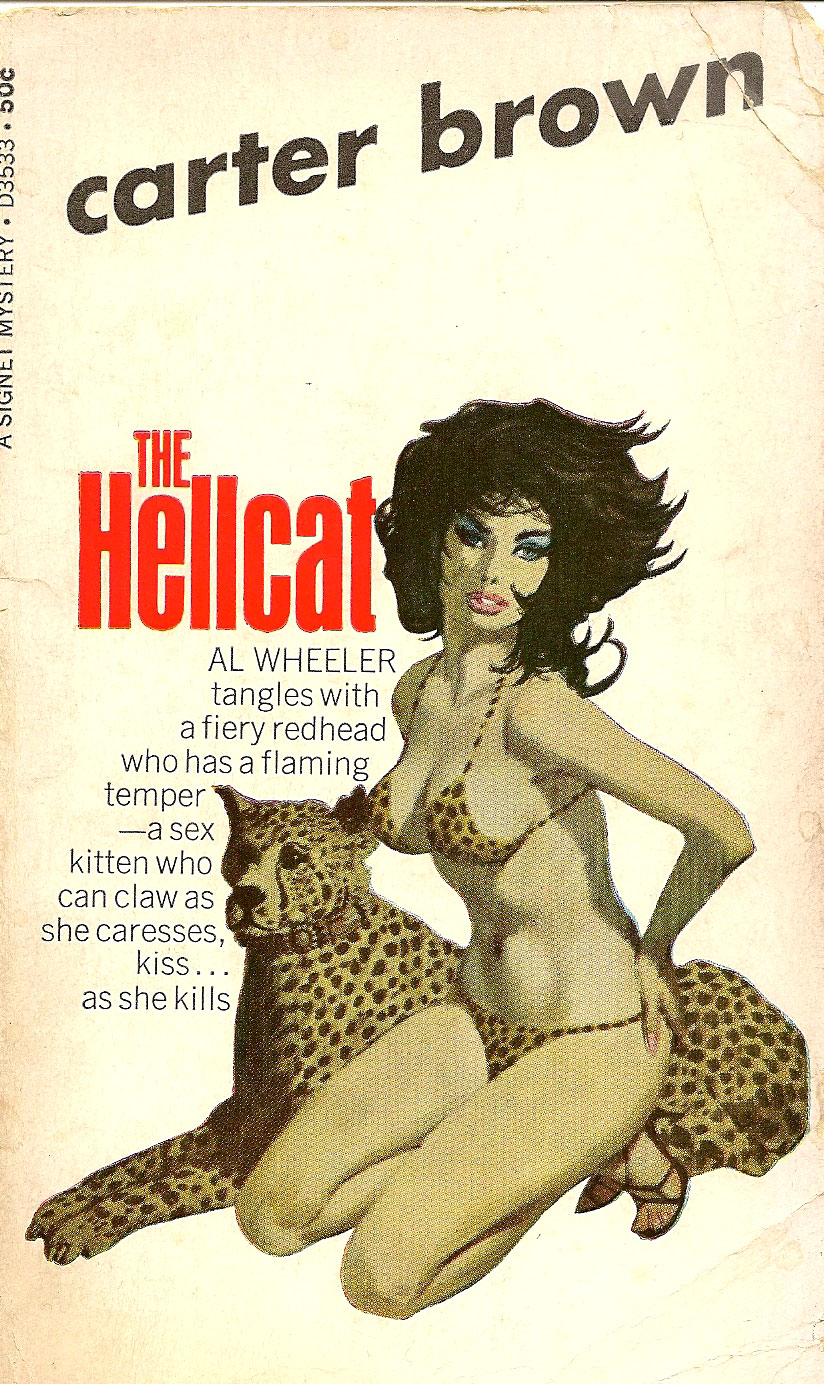
Going Downtown With Carter Brown

There has never been a beast so strange as the paperback publishing world, a once inexplicable planet where writers could make a fortune without garnering much respect in literary circles. I'm not referring to modern potboiler stars like Stephanie Meyer or Robert Ludlum. I'm referring to someone like Harold Robbins, who pretty much in his time had a stranglehold on the bestseller charts with tomes like "The Carpetbaggers" and "The Dream Merchants".

His books have sold in the billions worldwide. When people talk about great crime writers the usual names crop up: Raymond Chandler, James M. Cain, Donald Westlake, Elmore Leonard. Few ever mention or even care about Carter Brown, who in his time (1962-1972) sold millions of paperbacks worldwide. Who is Carter Brown?

Carter Brown in actuality was an Englishman whose real name was Alan Geoffrey Yates. Originally a PR writer for Qunatas Airlines in Australia, Yates turned to writing pulp fiction westerns, sci-fi space operas, and even romance weepies novels under assumed names. Every Carter Brown crime novel took place in America, and it has been rumored that a ton of them were written before Yates even set foot in the States!

The three most popular recurring characters in Brown's novels are Police Lieutenant Al Wheeler, private eyes Rick Holman, and dumb bunny detective Mavis Seidlitz (with the 38-24-36 measurements). Whichever character Brown featured in his novels you were always guaranteed a lot of smoking, drinking, and sexing up. In other words, Carter Brown novels were cheap Swinging Sixties pulp fiction at their sleaziest. Just to amp up the sleazy sex factor, each brief paperback clocking in at usually 120 pages a piece all featured covers of skimpily clad goddesses by the great Robert McGinnis.

For those who dig the Peter Gunn, Johnny Staccato and 77 Sunset Strip TV shows, Carter Brown is more of the same. Hard lovin' swingin' and two-fisting private eye with killer dames who drop their drawers before they swing their fully loaded .357 Magnum at yr. skull. Smoke a Lucky Strike and crack open a Carter Brown novel, it ain't noir, it's better than noir, it's sexy trash.

While I haven't read enough Brown books to qualify as an expert on his work, I'd like to weigh in on some of my favorite books I've read by him:

The Corpse: Lt. Al Wheeler’s on the case of the mystery of the annoying, drugged-out hepcat that got iced in front of the bandstand at the hippest beatnik jazz coffee house. The only reason his murder’s a big whoop is because he’s the son of a powerful newspaper magnate. The Fifties jazz club vibe of the book will remind you of John Cassavetes’ terrific detective show, “Johnny Staccato”. Lots of babes, booze, billionaires and beatnik bongos abound. The Robert McGinnis cover doesn’t disappoint either.

W.H.O.R.E.: One of the more surreal detective novels ever written, police Lt. Al Wheeler runs afoul of a gang of psychotic killers in Mickey Mouse and Donald Duck masks. The Mickey and Donald-mask wearers are strike breakers who plan on assassinating a Cesar Chavez-style protest leader who's making plans on marching down the Grapevine with his fellow fruit pickers. And that's just the first sixteen pages!

Somewhere in the mix, of course, are a team of deranged feminists called W.H.O.R.E. If it sounds crazy, just remember this was published in 1971 when exploitation films like "Sweet Sugar" and "The Mini-Skirt Mob" were at their apex. Unless Carter Brown's estate is controlled by an iron fist there's no reason why his wild novels aren't being reissued by Stark House or Hard Case Crime.

Tomorrow Is Murder: More Sixties sleaze from Carter Brown about a sexy psychic predicting a millionaire’s death on a Joe Pyne-style TV talk show. The PI this time is Mavis Seidlitz, a bodaciously stacked bimbo blonde in the Little Annie Fanny tradition. She’s on the case in groovy Venice circa 1960, busting up bongo beatnik coffeehouses and catfighting witches into Beverly Hills poolsides. Carter Brown never disappoints.

The White Bikini: Quick, entertaining sleaze about a Hollywood party girl found dead on the beach who may be the daughter of a high-powered movie studio executive. The trail to murder leads private eye Rick Holman to oversexed folk singers in coffeehouses of Venice, psychotic bodybuilders in Muscle Beach, and studio brats spinning roulette wheels in Las Vegas. Trashy good fun that embraces Sixties culture at its wildest.

Other Carter Brown book titles you may not have heard of: Who Killed Dr. Sex?, No Tears From The Widow, The Flagellator, The Ice Cold Nude, No Blonde Is An Island, Nymph To The Slaughter, The Bump And Grind Murders, Walk Softly Witch, and countless more!

Without belaboring the point that Carter Brown novels are sleazy but entertaining trash, there are no philosophical soliloquies that you get in a David Goodis classic or some deep existential journey into darkness like Jim Thompson. Like his contemporary Mickey Spillane, Carter Brown served up pure entertainment dressed up as a sexy crime novel with insanely generous servings of pop culture trash: surfing, beatniks, hippies, strippers, health food freaks, fitness and yoga clinics, pill - popping psychiatrists with nothing but sex on their minds, etc. Compared to the crimes committed on shows like "Breaking Bad" it just seems quaint in comparison.

Thursday, October 4, 2012

YA Noir: Teenage Wasteland Lit

One of the most exciting discoveries I’ve made in reading lately is an increase of roman noir elements in Young Adult (YA) novels. Although they’re lacking in the familiar femme fatale theme commonly used in noir, these books nevertheless play the same old themes – crime, paranoia, and soul-wrenching guilt - once mined by such noir masters as Jim Thompson, David Goodis, and Cornell Woolrich.

If someone can lay claim to being the originator of this style it would be S.E. Hinton, author of teen classics The Outsiders, Rumblefish, and That Was Then, This Is Now. Rumble Fish was a cool movie that looked a lot like Robert Frank’s The Americans and had Mickey Rourke perfecting his Richard Hell impersonation with Tom Waits doing a Pop’s Chocklit Shoppe routine, whilst listening to Wall Of Voodoo and The Police jamming on the soundtrack…very new wave…totally Eighties. Then there’s the book.

S.E. Hinton writes more like a noir writer than a YA one, complete with flashbacks, delusional madness and death. Her uncanny ability to get into a teenage boy’s mind and do so with intensive insight is nothing short of remarkable.

Rumble Fish was written in the Seventies so I imagine more of a burned-out Motorcycle Boy fried by too many Boones Farm empties, dozens of Testors glue tubes, and scratchy Steppenwolf records. Whichever spin you put on Rumble Fish it’s one of the best tomes in the Teenage Wasteland bookshelf.

That Was Then, This Is Now is a coming of age story that's equal parts "The Hustler", "Rumble Fish" and the Jack Kerouac-Neal Cassady bromance legends. Two punks grow up = one goes straight, the other gets crookeder, the story's been told many times before. But S.E. Hinton gives it a fresh spin setting it in Vietnam War-era hippiedom so you get psychedelic painted Volkswagen buses and Roger Corman-style drug den crash pads. As is the case in all noir books everything explodes at the end because hip kids never win and squares always spin.

Another major voice in YA noir is the late Robert Cormier, whose tales of teenage despair are even darker, so much so that several of his books have been banned from school libraries for their bleak vision of youth gone mad. His most famous work was The Chocolate War, but my favorite work of his is Tenderness.

Tenderness might well be the pinnacle of YA Noir with Robert Cormier holding court as its master. An amazing work, it's the story of a lovesick teen runaway who stalks an unrepentant teenage serial killer with dreamboat looks after he's sprung from juvie. Ironically they met several years previously when she caught him nuzzling a girl who was about to be his next kill.

Cormier's work is extremely dark and complex. You don't need to be a pimple popper to dig this genius murder story, in fact, calling Cormier a YA writer is a lot like calling Cornell Woolrich a crime writer. Also recommended is a strange novel called Heroes, about a teenage war veteran (in by 16, out by 18) with a disfigured face who returns to his hometown stalking the pro-war motivational speaker that talked him into enlisting and stole his girlfriend in the process, with the intention of killing him. Crazy as hell!

More famous examples of the YA Noir genre would be Paranoid Park written by Blake Nelson and directed into a motion picture by Gus Van Sant. Paranoid Park is a brilliant YA noir about a skater boi from the 'burbs who accidentally kills a security guard at a railyard. The murder ironically creates a rite of passage making him question his existence, his values and everyone in his orbit. Tightly written with no room for chaff, this is the best noir I've read in ages and could teach those fedora wearing old farts a thing or two.

Also well known is Mysterious Skin written by Scott Heim and made into a motion picture by Gregg Araki. A flawed masterpiece that continuously treaded on fragile territory, sometimes making it through the high wire act and other times falling ass over elbows into the circus net below. The fragile territory is child molestation by a Little League coach with the aftermath as told by two different boys: Brian, who grows up somewhat asexual obsessed with UFOs and aliens, and Neil, a promiscuous teen hustler.

There's something kind of weird about calling a book like this beautiful but there are passages that are downright poetic and gorgeous. It's just that there are parts that will trouble many, like the fact that Neil the Hustler had homosexual urges prior to his molestation, so it's implied somewhat that he "wanted it". Maybe Mr. Heim thought this urge would somehow take him off the hook -but the whole idea is so shaky.

I actually bought right into the whole story until the last three pages when it's revealed that both boys engaged in a certain activity that no 8-year old would agree to without collapsing into spasms of hilarious laughter. The fact that it's told in such a drop dead serious and manipulative fashion - with Christmas carolers singing in the background, even! - turned the whole ending into an unintentional parody. It’s still a great book and worthy of your attention.

Older, less popular examples of YA Noir would be “Giveaway” by Steve Fisher, an absolutely brilliant Fifties noir about a teen runaway in Hollywood who falls in with an aging hustler, her daughter, and countless Vaudeville burnouts working the TV quiz show circuit.

“Giveaway” recalls Horace McCoy at his finest in depicting small-time chiselers seeking fame and fortune at the lowest rung in Hollywood. Corruption in the game show biz is in large supply here, too. The book's ironically timely in this age of American Idol, Dancing With The Stars, and all the other migraine contest shows.

You’ll have fun guessing the thinly fictionalized locations in the book like Clifton’s Cafeteria, RKO/Desilu Studios, Sy Devore, Wallich's Music City, and the Hollywood-Highland Rexall Drugs. I’d say this is the best Steve Fisher novel, way better than “I Wake Up Screaming”. Highly recommended.

Then there’s The Fourth Angel by John Rechy, the toughest book about teenagers ever written. A pack of outcast teens dare each other to play vicious games with strangers they brutalize and degrade in a haunted house. The sexual lines are crossed and double-crossed by them. John Rechy outdid "City of Night" with this one, and that's saying a Hell of a lot!

While teen despair is nothing new these books serve up something extra-intense and daring to the show, and I don’t mean a bunch of B-movie vampires and werewolves falling in love. There’s a depth and maturity to these characters and the story they tell that’ll frighten all the grown-ups, case in point Mr. Cormier’s struggle to even get his books available to his audience. When literature poses that much of a threat to American society then it’s more vital and subversive than any punk rock record ever cranked out.

Thursday, October 13, 2011

French Crime Time

It’s simply a matter of propinquity, but lately I’ve discovered a lot of great crime novels and movies this past summer, all produced in France. Nobody renders crime stories the way the French do. Their slant on noir is unique for two reasons I can think of:

1. They are the biggest fans of noir, bigger than America. Writers like Cornell Woolrich, Jim Thompson and David Goodis have enjoyed greater popularity there than in their home country. Many American noir novels have been adapted into film on a routinely regular basis, so as a result their influence on modern French crime writing is considerable; and,

2. The French have always suffused their noir with erotica, so in addition to all the cold-blooded misanthropy the story-telling serves heaping dollops of sex. Many of the books and movies listed below have strong sexual activity in them that serve the stories well.

One of my discoveries this past summer was the works of Sebastien Japrisot, a highly successful, award-winning writer who’s virtually unknown in the United States. That’s a shame, because he’s a brilliant story-teller and deserves to be read by more people. My favorite books by him are:

One Deadly Summer, the tale of a beautiful but amoral girl who moves into a small town and marries into a family that she believes played a role in brutally attacking her mother. In the course of her revenge there’s lots of Brigitte Bardot-styled sex shenanigans.

Trap For Cinderella, a tale of two girls, one rich and beautiful, the other poor and plain, trapped in a house fire in the South of France (where else?). One girl survives with her face reconstructed and her memory lost. Which girl survived the fire? An inheritance of millions is at stake, so if the poor girl survived she’ll require lots of training from an insane female guardian.

The Lady In The Car With Glasses And A Gun, a timid yet beautiful secretary drives off with the boss’s expensive American convertible, picking up hitchhiking gigolos near the South of France (here we go again!), having her way with them and finding a dead body in the trunk of the car.

Another great crime writer is Jean Patrick Manchette, whose novel Fatale is the bizarre tale of a female hitman losing her grip on sanity. She stops in a small upper-class village and foregoes the chance to blackmail the richest citizens after having a meltdown and simply kills them methodically, one after another. This one also had some surreal touches in them, as well, like the professor who serenely urinates all over the banquet room wall in one chapter.

Right around this time I also caught TCM’s Summer Under The Stars series on the day they highlighted crime star Jean Gabin. They screened Jean Renoir’s classic film, La Bete Humaine (Human Desire), a great noir with a brilliant performance by Gabin. The film has a recurrent theme of a speeding train during scenes of murder and lovemaking. The love interest is played by Simone Simon of “Cat People” fame, and she’s also very good in it.

Another Gabin film I saw was Georges Simenon’s The Night Affair, a hipster noir about a police inspector who falls in love with a strung-out jazz singer who frequents a beatnik night club. Made in the Fifties during Gabin’s older years, it has that weird French underground vibe with a TV detective show vibe (think “Johnny Staccato”) combined. I liked it a lot, and of course there’s lots of sexy Fifties gals like Nadia Tiller in it to keep it French and noir.

The French love for noir is the stuff of legend. Film critics have always professed their love for film directors like Anthony Mann, Robert Aldrich (“Kiss Me Deadly” being a big favorite), Sam Fuller, and many others, while upper-echelon directors like Francois Truffaut have directed noir classics like “Shoot The Piano Player”, “The Bride Wore Black”, and “Mississippi Mermaid”.

I really like the French spin on noir and intend to investigate more great stuff that hasn’t enjoyed enough popularity in our country. What we take for granted here in the States is a revered genre in France, and sometimes we need the superfans to remind us what an important art form it is.

Thursday, July 14, 2011

The Other Broadway


My lunch break from work was always some ungodly great escape, but no great escape could ever top my weekly forays down Broadway in DTLA (Downtown LA). No lover of Mexican culture, I was nevertheless in awe of all the cool shops down this heavily Latinized section of town. I'd walk down the hill from 1st Street and cut over past all the bridal dress shops - teenage brides served daily! - and head over to The Bradbury Building. It's weird stepping in there and seeing those legendary staircases and balconies where Darryl Hannah attacked Harrison Ford in "Blade Runner" and the immortal Edmond O'Brien facing down his killer in "D.O.A." Brilliant. It's also home to the classiest-looking Subway I've ever eaten at. Next door is the world's oldest men's barber supply store. You can actually pick your favorite straight razors and shaving cream brushes; the selection is incredible.


Next door to the Million Dollar Theatre is a wild place called the Farmacia Y Botanica Million Dollar, which has in addition to Jesus and Virgin Mary statues figurines of El Diablo (Satan) and The Grim Reaper. In addition to the incense and votive candles are green penis candles and red vagina candles. This is religion a la Burger King - "Have It Your Way", divinity and sex objects galore, a real action kind of place, y'know. A few steps away is the legendary Grand Central Market where you can buy any kind of food you like and then some. I saw a lot of cabezas (cow and sheep heads). I think I saw a few pig skulls, too, which reminded me of Rory Calhoun in "Motel Hell".


Meanwhile a lot of bad cha cha music booms out of tinny speakers just like the beginning of "Touch of Evil". You'll be looking over your shoulder making sure Uncle Joe Grande isn't trying to throw a bottle of acid at you. Take another block down and after you pass Falles Paredes (sounds like Phallus Paradise!) you'll chow down at Hoagies And Wings, one of the few places in L.A. where the hoagies actually have some soul and personality. More importantly, though, is the International House of Music, an enormous music store with PA equipment, turntables for the DJ's and even tympani and cellos for all the cats fromneighboring concert halls like The Music Center, The Walt Disney Concert Hall and The Colburn School for The Performing Arts, in case they're short a few strings or reeds. I also liked the "Nipper" statue in front greeting you as you entered the store. Awesome!


Broadway was such a fucking Shangri-La from all the starchy, uptight, post 9/11 paranoia motherfuckers I had to suffer all day at the Board of Supervisors. While the job I deserted hangs a pall over me like a bad nightmare I have to confess to missing my little escapes, like the majesty that is Broadway and all its beautifully eccentric quirks. Any place that can pull off a cool Subway deserves your respect.


Friday, March 25, 2011

Cheapie Noir Czech Hugo Haas

Before the advent of cable TV, satellite TV and any other form of video entertainment the only way you could catch low-budget B-films and other cinematic obscurities was on The Late, Late Show, usually accessed on a local television channel every night after 2 am. It was a filmic No Man's Land of weird comedies, poorly dubbed foreign films (gladiators are standing by), and ultra-low budget noir movies. This is the universe that Actor-Producer-Director Hugo Haas inhabited.

Hugo Haas, Czech exile from the Nazi menace that destroyed Europe, came to the United States in 1940 playing Slavic Counts, Professors, Concert Pianists and even sidekicks in adventure films like "The Fighting Kentuckian" and "The Princess and The Pirate". By 1950 he turned to producing and directing a string of noir vehicles usually starring himself and boxy battleship blonde Cleo Moore.

While some people have quipped that "Once you've seen one Hugo Haas film, you've seen them all", I think they're being a little too harsh on the guy. I will say this, if you like James M. Cain's "Postman Always Rings Twice" you know the triad. Haas is the nice Slavic gas station/cafe owner/working stiff married to the conniving cheap blonde dying to bust out of her dreary surroundings (Cleo), and the hot young stud with the monkey wrench in his mitt aimed at the back of Haas' skull (a revolving cast of studs: John Agar, Vince Edwards, etc.). Haas riffs on "Postman Always Rings Twice" with enough clever variations so you don't mind the redundancy. Besides, in two films the wife is played by Beverly Michaels, no slouch in the golddigger department.


While I haven't seen every Haas movie ever made, the following is a list of the ones I have, most of them recommended:

Hit And Run (1957): Hugo runs a creepy auto-salvage yard symbolizing his ramshackle existence in a new country he's too unhip to fit into, meets cheap showgirl Cleo Moore who sizes up his assets and marries him. Vince Edwards recalls his role as the philandering hipster creep from "The Killing" by scheming with Haas' wife Cleo Moore in killing hubby (Hugo). They run him over on a darkened road, but to their horror receive a visit from Haas' twin brother...or is he??? Dolores Reed stops the show as a lusty lion tamer.

Strange Fascination (1952): Pretty dull affair where Haas plays a concert pianist who chases after a nightclub dancer (Cleo), one of the thickest I've seen since The Velvet Hammer in their heyday. The sets are over dressed and there isn't enough tension to make this a noir. It's more like a bad melodrama than anything.

One Girl's Confession (1953): The only Haas movie available on DVD and for good reason; it's the best Cleo performance I've seen. She plays a waterfront waitress who embezzles a big bundle from her father's ex-partner and hides the swag in the woods. Once she's freed from prison she gets a job working for hard-drinking and harder-gambling Hugo at his cafe. Sending him out to get her loot after losing his ass at cards, she assumes he ran off with her money and kills him. This movie has some dream-like images regarding redemption employing images of a Nun's Orphanage and the Pacific Ocean.

Bait (1954): This one is so Z-budget it looks like a Shemp-period Three Stooges short. Too bad it also has John Agar, Cedric Hardwicke(!) and Bruno Vesoto in it. There's a lot of hurly burly going on about gold mines, prospecting in the desert and Cleo being used as bait to exploit Agar. Slow and one-dimensional.

Pickup (1951): Haas is a station agent for the railroads and bags cheap Beverly Michaels who thinks he's got a fortune stashed away in the desert. Alan Nixon is his young assistant and Michaels races after him for some lust and larceny, plotting on the killing of Haas, discussing it out loud in front of him because he's lost his hearing with the most intense case of tinnitus in the history of the cinema. The movie also has a beatnik hobo buddy called The Professor. This is one of Hugo's best and reminded me a lot of pulpy Jim Thompson novels.

After his string of noir classics he made "Lizzie", a "Three Faces of Eve" type multiple-disorder movie, a detention girl film (1959) and three years later made his last film which starred Marie Windsor, Chester Conklin, Corrine Griffiths and a few other silent film stars.

While his movies weren't the kind to compete with Billy Wilder or Robert Siodmak noirs, there's an awesome dime-store crime novel vibe to all his films that makes them irresistable. Haas films are fun no matter how sleazy and its high time for a serious revival of these back door Late, Late, Late Show classics.

Sunday, May 16, 2010

Yeah, I'm Lame


Yeah, I'm lame. After posting a blog every week for three years I missed a week. I'm sorry. I'm too busy reading Patricia Highsmith's lesbian classic "The Price of Salt". Brilliant shit. Now I'm reading Chester Himes' "The Real Cool Killers". Damn!

Before you decide to hate me I posted some cool pictures of Veronica Lake, a woman who could look funny and totally slammin' at the same time. All those Alan Ladd films, crap, she made him look cool, once she was off the screen he looked like a damp rag.

Later this week I'll post something great. I promise. Don't hate me, I'll even take a day off work to stay home and write something cool for you. In the meantime listen to the best album of 2009, "Invisible Girl" by King Khan and The BBQ Show. Genius. Or rent the best film of 2009, "A Serious Man" by Joel & Ethan Coen. Or just wait. I'll be back!

Friday, March 26, 2010

Stuff I Burned From TCM, Part 9


A number of movies I’ve written about for the past few years have finally seen the light of day on DVD: Overexposed, Rancho Notorious, The Glass Wall, and a few more, so I’m pretty sure this will be the next to last installment of “Stuff I Burned From TCM”. I’ll probably move on to something else movie-related, but until then here are a few more movies that need to see a proper DVD release:

Heat Lightning (1934): Classic hard-boiled Warner Bros. crime film about a pair of sisters working at a motel in the Mojave Desert. Olga’s a frilly girl waitress and her older sister, Myra, (Ann Dvorak) ia a pretty butch auto mechanic. Her cover as a mechanic’s blown once her ex-boyfriend, a sleazy gangster on the run exposes her glamorous gun moll past. Similar in tone to “The Petrified Forest”, but I actually liked this better. A lot of stock Warners players, like Glenda Farrell, Frank McHugh, Ruth Donnelly, and Lyle Talbot are on hand giving their usual great support. Ann Dvorak is brilliant, and this film deserves a decent release.

Ladies of The Chorus (1948)
: One of the few Marilyn Monroe movies that still hasn't been released to DVD, this low-budget B picture clocks under an hour at 57 minutes. In spite of its brevity it still has tons of padding with several music numbers, some which have Marilyn crooning. Many people have laughed at the casting of Adele Jergens as her mother, probably three years older than Monroe with an unconvincing gray streak dyed into her hair. The plot basically consists of Monroe and Jergens playing a mother and daughter showgirl team and Mom’s reluctance at having her daughter date a millionaire’s spoiled son. The film has all the production values of an old Three Stooges short, no surprise because Columbia Pictures released this film.

The Unholy Three (1930): Lon Chaney’s last film and the talkie version of the Tod Browning silent classic. The talkie version is similar in tone to “Freaks” and Harry Earles is even on hand to play Tweedle Dee the midget. Chaney plays half the film in drag disguised as a kindly old lady pet shop owner, and it’s always amusing watching him tear off his wig, pop a cigar in his mouth and chew out Goliath the strong man. The last line in the film would be his last, “That’s all there is to life… a little laugh, a little tear”, while waving goodbye from a departing caboose. It was as if he’s waving goodbye to the audience, because he died a week after the film wrapped.

Primrose Path (1940): Just like "Heat Lightning" this movie was originally a play, but it moves fast and doesn't seem too talky. Ginger Rogers is a shack-living tomboy from Venice who falls for Joel McCrea, a motorcycle-riding burger flipper down PCH way. He likes the "Portuguese gals" (is Mexican a dirty word?) but falls for the tough dogtown girl. Ginger's mom and stinkbug grandmom, however, are sleazy gold diggers who want Ginger to carry on the family tradition of banging rich bums for their dough. Rogers turns in a performance reminiscent of Barbara Stanwyck in "Stella Dallas" and McCrea turns in another great big galoot performance.

Friday, February 19, 2010

Speak Of The Devil


Every day when I drive home from work on the way home I see this teenage couple locked in a passionate embrace kissing against a fence, making out against the bars like its a matter of life and death. They're always at the same spot making out at exactly the same time, you could set your motherfucking watch to it, it's uncanny. It got me to thinking, what if they actually missed a day together, would one of them snap, would the boy snap first or would the girl snap? Will they eventually quit making out and marry, or will they just die like dried out flowers? But I digress...

There's a disturbing, violent piece of work by Gilbert Hernandez titled "Speak Of The Devil", which attains a nightmarish tone that never lets up once. A creepy Peeping Tom wearing a monster mask stalks the neighborhood watching the neighbors having sex. By Page 13 we realize not only is the Peeping Tom a teenage girl, but the local high school gymnastics champion! Beautiful, talented, and admired by her peers, she leads a perverse private life. To add insult to injury, the couple she peeps on is her father with his girlfriend, Linda! Another window she peeps in is her emo boyfriend Paul's house, watching her love getting periodically beaten by his bully father, constantly chiding him for being a "pencil-neck faggot". If he only knew.

Things get sicker, though: Paul discovers Val's secret obsession, and they make love in a cemetery. Soon after Val injures herself out of the gym championships (a reversal on the Samson and Delilah lovemaking turning to vulnerability?), hobbling around on crutches and cheering on her physically inferior classmate, Patty. If that isn't demoralizing enough, she comes home to catch Linda making it with her boyfriend, Paul! Val loses it and tries to kill them both, but they surprise her by attacking her. They decide to form a terror-laden menage a trois, the first victims being Paul's parents, blinding them before cutting their throats.

The trio decide to relax after the killing by hanging out at the beach, but not without killing an innocent woman and taking her wallet. They cut the eyes out of more innocent people just for kicks, hiding in a hotel and pretending they were abducted to cover their tracks. Val, jealous of Linda's control over her Dad and Paul, tries to convince him that she has to be killed before she turns them both in. Val, sensing trouble, leaves the couple and spins a yarn on the TV news about escaping "The Abductors". Paul begins moping about her absence, so Val flips out and stabs him to death. Don't worry, there's more!

Val decides to confess to her estranged mother about her crimes and quickly realizes her psychosis was inherited from, guess who? Brandishing a steak knife, Mom screams, "It wasn't that cow Linda who took your father from me! It was you!!" "From the day you were born he stopped loving me!" "I'll kill you to get him back!" Val, after a wild battle with her mom, using her best gymnastics skills, kicks her to death; out of guilt for killing her mother, comes back home and cuts her father's eyes out. Linda, believing she accomplished the murder, kills herself under the delusion the police are breaking down her door. Back at the cemetery, Val confesses all to Patty, her gym classmate, who strangles her to death on the spot. The story ends with a girl saying she's going over to Patty's house to see her, with the Peeping Tom monster mask sitting in her handbag.

This is probably the darkest thing Gilbert Hernandez has ever created, and that's saying quite a lot. I don't believe "Love And Rockets" fans in general like this sort of comic, but it's such a chilling and demented tale of familial unhappiness, almost like some kind of modern Greek tragedy with a suburban spin. Hernandez's use of light is highly expressive and adds greatly to the creepy vibe throughout. The lack of attention paid to this slasher epic is surprising. I loved the Herschell Gordon Lewis vibe "Speak Of The Devil" struck, and think that this particular tale of adolescent love gone psychotic will stay with you for a long time.